When temperatures drop below freezing in Minnesota, garage door springs can become more vulnerable to failure, particularly if they are already worn or corroded. These hardworking components support the weight of your garage door through thousands of opening and closing cycles. Cold temperatures, metal fatigue, moisture, and everyday wear can all contribute to a spring breaking unexpectedly. Learn why garage door springs sometimes fail during winter, how to recognize warning signs, and what Brainerd-area homeowners should know about safe spring repair and replacement.
Imagine waking up on a freezing Minnesota morning. You are getting ready for work and pressing your garage door opener. However, instead of opening normally, the door barely moves. Maybe you heard a loud bang from the garage overnight. Or perhaps the opener runs but the door refuses to lift. This may relate to why garage door springs break when its cold.
A broken garage door spring could be the reason.
For homeowners throughout Brainerd and the surrounding Lakes Area, winter can be particularly demanding on garage door systems. Freezing temperatures, moisture, snow, and regular daily use create conditions that may expose weaknesses in aging components.
But why do garage door springs break, and does cold weather really make a difference?
To understand how springs work and what causes them to fail, examine which warning signs deserve attention.
Additionally, this understanding helps homeowners decide on maintenance and repair, including why garage door springs break when its cold.
Garage door springs are among the most important components of the entire garage door system.
Although your automatic opener provides the movement, the springs counterbalance much of the door’s weight. This allows the door to open and close without requiring the opener to lift its full weight.
Without properly functioning springs, even a relatively lightweight residential garage door can become extremely difficult to operate.
There are two common types of garage door springs.
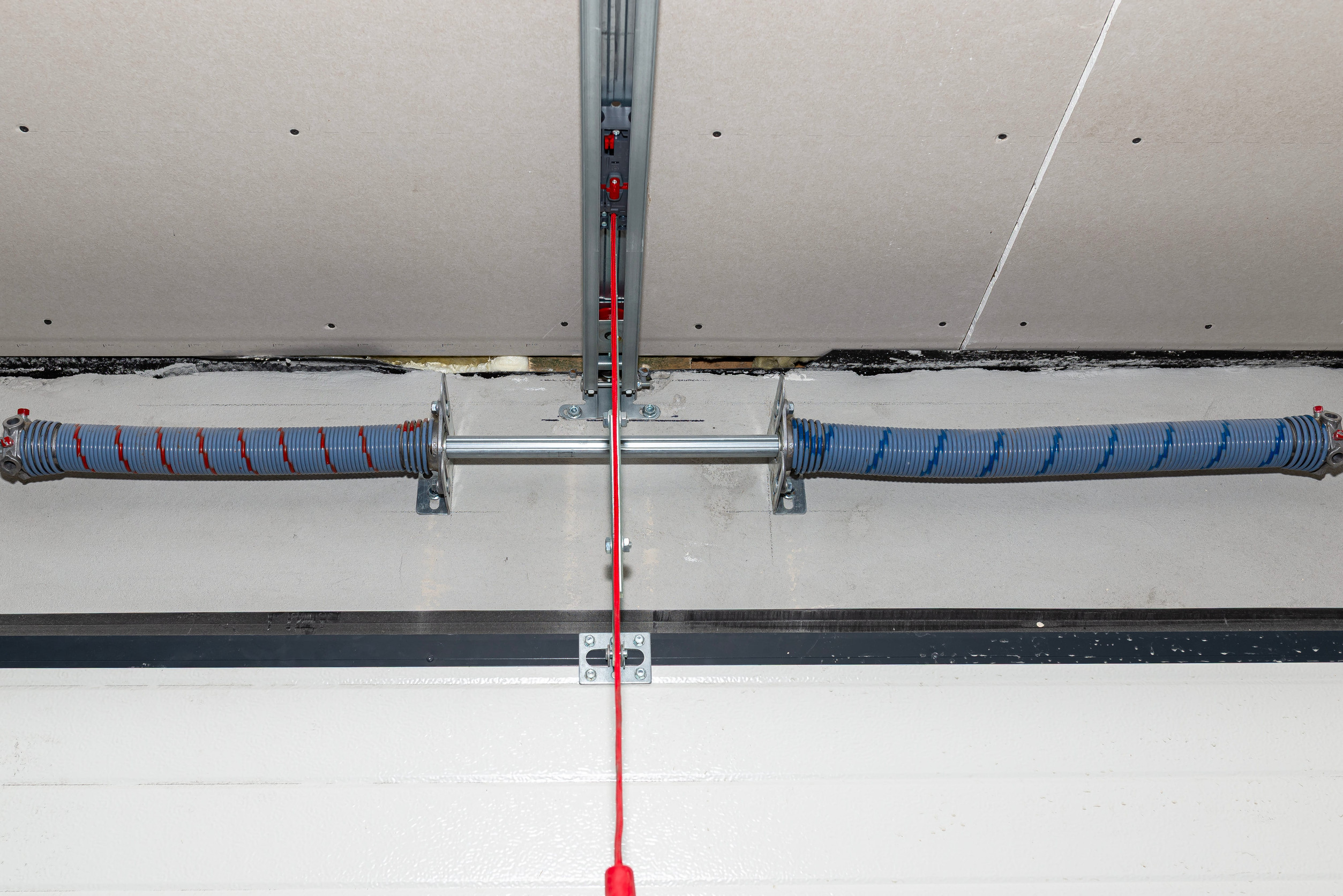
Torsion springs are typically mounted on a metal shaft above the garage door opening.
As the door closes, the springs wind and store mechanical energy. When the door opens, they release that energy to help lift the door.
Extension springs are generally installed along the horizontal tracks on either side of the door.
These springs stretch as the door closes and contract as it opens, helping counterbalance the door’s weight.
Both systems experience significant tension during normal operation. That is why garage door spring repair should be handled by trained professionals rather than attempted as a do-it-yourself project.
However, a garage door spring does not necessarily fail simply because the temperature drops below freezing.
However, winter conditions can contribute to problems, especially when springs are already weakened by age, repeated use, or corrosion.
Several factors may be involved.
Garage door springs are commonly made from steel.
Like other metals, steel changes slightly as temperatures rise and fall. Extremely cold conditions can influence its mechanical behavior, although the degree of change depends on the steel and how the spring was manufactured.
A properly designed spring should tolerate normal operating conditions.
However, a spring that already contains fatigue damage, corrosion, or another weakness may be more vulnerable when additional stresses occur.
This helps explain why a garage door spring breaks in cold weather even though it appeared to work normally the previous day.
The cold may contribute to the failure, but it is rarely the only factor worth considering.
Every time your garage door opens and closes, its springs complete another cycle.
Over thousands of cycles, repeated loading causes gradual metal fatigue.
Eventually, a spring can develop microscopic cracks that grow until the metal can no longer withstand the stress.
This process happens regardless of the season.
However, when an aging spring encounters demanding winter conditions, an existing weakness may become more apparent.
A spring that breaks in January may have been approaching the end of its useful life for months.
Minnesota garages regularly experience moisture during winter.
Snow and slush enter on vehicles, then melt and create damp conditions. Road salt can also contribute to corrosion when moisture reaches exposed metal components.
Rust is particularly concerning because it can damage the surface of a spring.
Corrosion may create small pits that concentrate stress and provide locations where fatigue cracks begin or grow.
Over time, this can shorten the spring’s service life.
Keeping the garage reasonably dry and addressing visible corrosion can help reduce avoidable deterioration.
A garage door may experience additional operating resistance during winter.
Thickened lubricants, frozen weather seals, ice buildup, damaged rollers, or track problems can interfere with normal movement.
These conditions do not automatically break a spring, but they may create abnormal loads or reveal a door that is already poorly balanced.
If the door struggles to move, forcing it to operate can make the situation worse.
A properly maintained system should move smoothly, even during Minnesota’s colder months.
Garage door springs are commonly rated according to the number of operating cycles they are designed to withstand.
One cycle generally means one complete opening and closing of the door.
Some residential spring systems are rated for approximately 10,000 cycles, while higher-cycle options may be available.
Actual service life depends on spring design, installation, maintenance, operating conditions, and daily use.
Consider two households.
One opens the garage door twice a day. Another opens it six or eight times daily because the garage serves as the family’s primary entrance.
The second household accumulates operating cycles much faster.
That means two springs installed in the same year may reach the end of their useful lives at very different times.
Rather than relying on age alone, homeowners should consider usage patterns, visible wear, and the door’s overall operation.
A broken garage door spring can cause several noticeable symptoms.
Some are obvious. Others may initially look like an opener problem.
One of the most recognizable signs of spring failure is a sudden, loud snapping or banging sound.
When a spring breaks under tension, the release of stored energy can create a startling noise.
Homeowners sometimes mistake it for something falling inside the garage.
If you hear an unexplained bang, inspect the garage door from a safe distance before attempting to operate it.
If the opener runs but the door barely moves, a broken spring may be responsible.
Because the springs counterbalance the door’s weight, the opener may be unable to lift it normally when a spring fails.
Avoid repeatedly pressing the opener button.
Continuing to operate the system can place unnecessary strain on the opener and other components.
A broken torsion spring may have a noticeable separation between its coils.
This is often visible above the garage door opening.
You can look for an obvious break without touching the spring or approaching damaged hardware.
Do not attempt to reconnect, unwind, or adjust the spring.
Some spring or cable problems may cause the garage door to move unevenly.
If one side appears higher than the other, stop operating the system.
Uneven movement can also indicate cable, track, or roller problems, so professional diagnosis is important.
A garage door that suddenly becomes difficult to lift may have lost the counterbalancing assistance provided by its springs.
Do not attempt to lift a suspected broken-spring door manually.
The door may be much heavier than expected and could move unpredictably.
If you suspect spring failure, the safest response is straightforward.
If the door is stuck open, avoid standing beneath it or attempting to lower it yourself.
A broken spring is not a problem that should be solved by increasing opener force or bypassing safety features.
Garage door springs store substantial mechanical energy.
Improper handling can cause serious injury.
The Door & Access Systems Manufacturers Association emphasizes that spring systems, cables, and related high-tension components should be serviced by trained garage door technicians.
Professional garage door spring replacement involves more than removing a broken spring and installing another one.
The technician must consider the door’s weight, spring specifications, counterbalance requirements, and overall condition.
Using an incorrectly sized spring can affect door balance and place additional strain on other components.
After replacement, the system should be evaluated for proper movement and safe operation.
Some garage doors use two torsion springs.
If one breaks, homeowners may wonder whether replacing only the failed spring is enough.
In many cases, replacing both springs is worth considering because they have experienced similar operating cycles.
If both springs were installed together, the remaining spring may have comparable wear.
DASMA recommends replacing both springs when a two-spring system experiences a spring failure.
However, the appropriate repair depends on the door’s design, the springs’ condition, and the manufacturer’s specifications.
A trained technician can explain the available options and ensure the replacement springs are properly matched to the door.
No maintenance routine can guarantee that a spring will never fail.
Springs are mechanical components with finite service lives.
However, proper care can help reduce avoidable wear and identify problems before they become more serious.
Periodically look for obvious signs of rust, damage, or deterioration.
Do not touch, stretch, or manipulate the springs.
If you notice visible damage, have the system professionally evaluated.
Remove accumulated snow and ice near the garage door.
If the bottom seal freezes to the floor, avoid forcing the door open.
Correcting the obstruction helps prevent unnecessary strain on the system.
Some garage door springs and moving components require periodic lubrication.
Use only products and procedures recommended by the door manufacturer.
Improper lubrication can attract dirt or interfere with certain components.
A garage door should move smoothly without excessive shaking, binding, or unusual resistance.
If it begins operating differently, investigate the problem rather than assuming cold weather is the only explanation.
DASMA recommends regular homeowner safety checks and an annual inspection by a trained garage door technician.
Professional maintenance can help identify worn components, balance issues, corrosion, and other conditions that may affect reliability.
Usually, a broken spring does not automatically mean the entire garage door needs replacement.
In many cases, the spring system can be repaired while the existing door remains in service.
However, a broader evaluation may be appropriate if the door also has:
For an otherwise sound garage door, replacing the spring system may be the most reasonable solution.
The decision should be based on the condition of the complete door rather than the spring failure alone.
When a garage door spring breaks during a Minnesota winter, the timing can make it seem as though freezing temperatures caused the entire problem.
In reality, spring failure often results from several contributing factors.
Years of repeated cycles, metal fatigue, corrosion, improper sizing, and existing mechanical problems can all influence how long a spring lasts.
Cold weather may add stress or expose weaknesses, but it does not automatically mean every spring is at risk of breaking when temperatures fall.
For homeowners throughout Brainerd and Central Minnesota, understanding these factors makes it easier to recognize warning signs and respond appropriately.
The most important takeaway is that garage door springs are essential safety components. When they fail, professional evaluation and proper replacement help restore the door’s balance and reliable operation.
Access Garage Door provides garage door repair, spring replacement, installation, opener service, and maintenance throughout Brainerd and the surrounding Lakes Area.
If your garage door has stopped opening, is operating unevenly, or shows signs of spring failure, the team can inspect the system and explain the appropriate repair options.
Access Garage Door
8998 County Road 144
Brainerd, MN 56401
Phone: (218) 537-8157
Email: ryan@accessgd.com