Minnesota winters can be tough on garage doors. Freezing temperatures, ice, snow, and moisture can affect everything from weather seals and moving hardware to garage door openers. If your garage door suddenly becomes noisy, sluggish, or difficult to open during cold weather, there may be several possible explanations. Understanding common winter garage door problems can help Brainerd-area homeowners recognize warning signs, avoid unnecessary damage, and know when professional service may be needed.
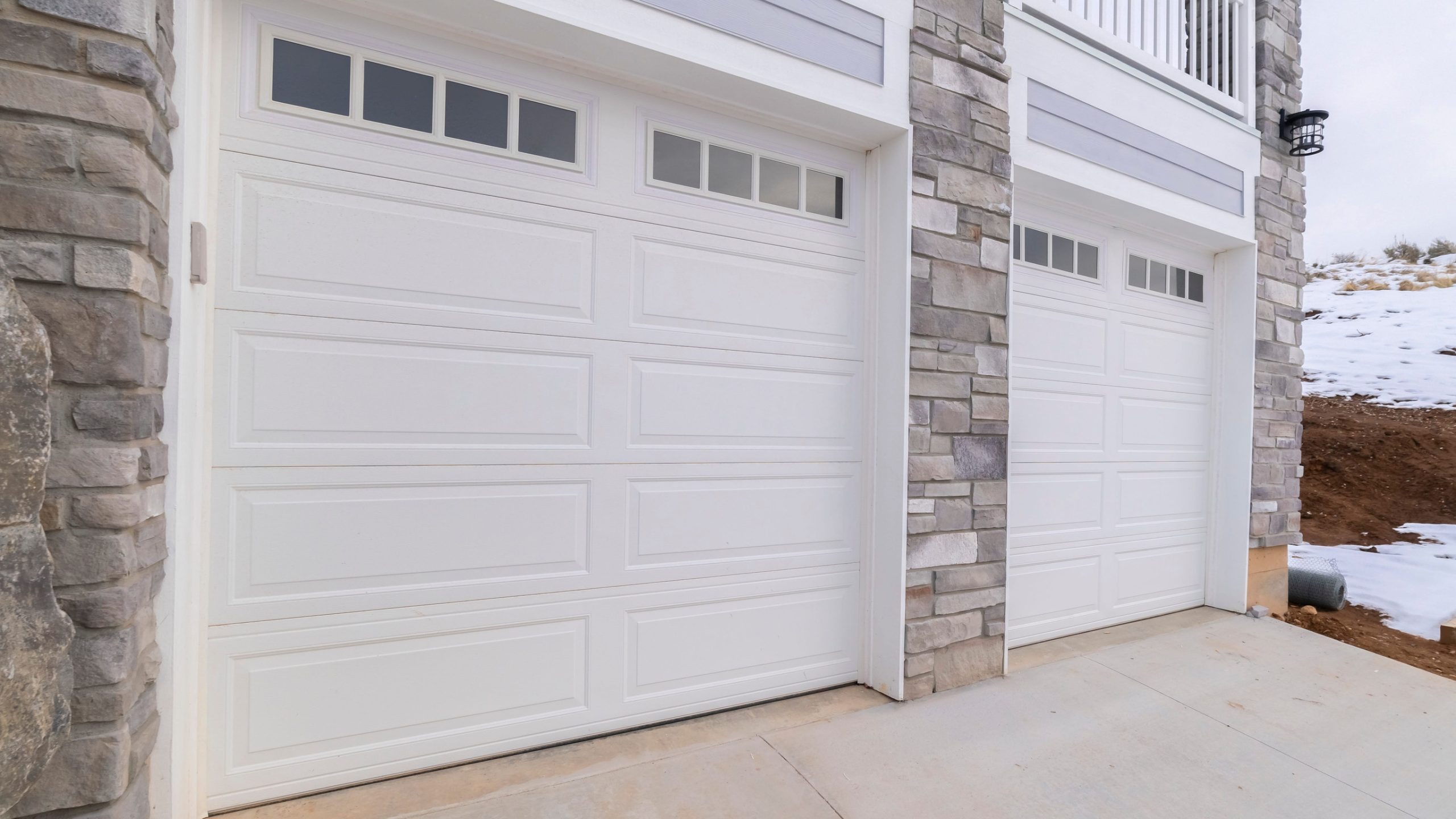
A garage door is more than a large panel that moves up and down.
It is a complete mechanical system that includes springs, cables, rollers, tracks, hinges, weather seals, and an opener. These components work together to lift and lower a door that may weigh hundreds of pounds.
When temperatures drop, materials and lubricants can behave differently.
Metal contracts slightly in colder temperatures. Certain lubricants become thicker, and rubber or vinyl components may lose flexibility. Meanwhile, snow, ice, and moisture can interfere with moving parts or prevent the door from sealing properly.
These conditions do not automatically cause a properly maintained garage door to fail. However, they can make existing wear, poor adjustment, or inadequate maintenance more noticeable.
That is why Minnesota garage door problems often become more apparent during the coldest months of the year.
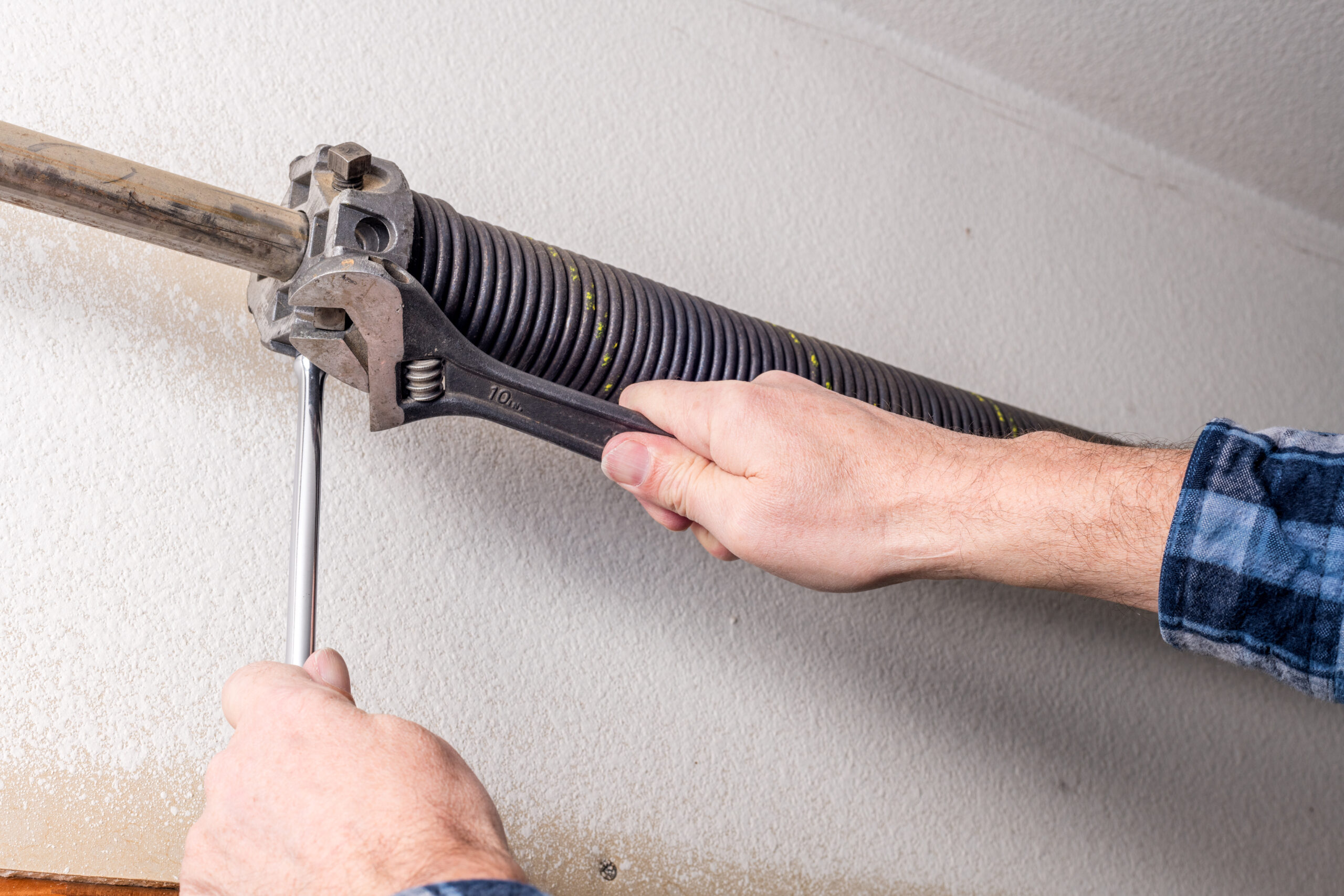
Garage door springs play an important role in balancing the weight of the door.
Without a properly functioning spring system, the opener may struggle to lift the door, or the door may become extremely difficult to operate.
Garage door springs experience repeated cycles of tension as the door opens and closes.
Over time, this repeated use causes wear and fatigue. Cold temperatures can change how metal behaves, and an already weakened spring may fail during winter operation.
However, freezing weather is not necessarily the direct cause of every broken spring. Age, cycle history, corrosion, and overall condition are important factors.
Warning signs of a possible spring problem include:
If you suspect a broken spring, stop operating the door.
Garage door springs are under significant tension and should only be repaired or replaced by trained professionals.
Another common cause of winter garage door issues involves lubrication.
Garage doors contain multiple moving components that benefit from appropriate maintenance.
Some lubricants can become thicker in extremely cold temperatures, increasing resistance or making existing mechanical problems more noticeable.
You might notice:
Not every lubricant is suitable for every garage door component.
Using an inappropriate product or applying too much can attract dirt and interfere with normal operation.
Follow the garage door manufacturer’s maintenance instructions and use products specifically recommended for the applicable components.
Avoid applying lubricant indiscriminately to tracks, belts, or other parts without checking the instructions.
If the door continues making unusual noises after appropriate maintenance, a professional inspection may be necessary.
Few things are more frustrating on a Minnesota winter morning than pressing the garage door opener and discovering that the door will not move.
Sometimes the problem is not the opener at all.
Snow and slush can accumulate near the garage opening. When moisture collects beneath the door and temperatures drop, the bottom weather seal may freeze to the concrete.
This is one of the more recognizable garage door problems in winter.
When the bottom seal becomes stuck to the floor, the opener may attempt to lift a door that cannot move.
Repeatedly activating the opener can place unnecessary strain on the system and may damage the seal or other components.
If your garage door appears frozen shut:
If you cannot safely release the door or are unsure why it is stuck, professional service is the safer option.
Weatherstripping helps close the gaps around your garage door.
The bottom seal and perimeter seals limit the amount of cold air, blowing snow, moisture, and debris that enters the garage.
Over time, these materials can crack, flatten, tear, or lose flexibility.
Extreme cold may make some aging seals especially stiff or brittle.
Inspect the garage door while it is fully closed.
Look for:
If your garage is attached to the house or used as a workshop, poor sealing may be particularly noticeable.
Replacing deteriorated weatherstripping can help reduce air leakage, although it will not make an unheated garage warm.
Proper sealing works together with garage door insulation and the insulation in the rest of the garage.
If your garage door won’t open in cold weather, it is easy to assume the opener has failed.
However, the opener is only one part of the system.
Cold weather may reveal mechanical resistance, a frozen bottom seal, or another problem that makes the door harder to move.
An opener that suddenly strains, stops, or reverses may be responding to resistance rather than experiencing an internal failure.
Watch for:
Remote batteries may also perform poorly in extreme cold, especially if they are already weak.
Before assuming the opener needs replacement, check for obvious obstructions and make sure the remote battery is functioning.
Never increase the opener’s force settings to overcome a door that is stuck, frozen, or mechanically difficult to move.
If the problem continues, the entire garage door system should be evaluated.
Minnesota homeowners are familiar with the effects of road salt on vehicles.
Garage doors and their hardware may also be exposed to salt, moisture, and winter debris.
Vehicles bring snow and slush into the garage, where it melts and can create damp conditions. Salt-containing moisture may contribute to corrosion on exposed metal components.
Over time, corrosion can affect the condition of hardware, springs, cables, and other parts.
Homeowners can help by:
A little surface discoloration does not automatically mean a component has failed.
However, significant corrosion, damaged cables, or visibly deteriorated springs should be evaluated by a trained technician.
A garage door contains materials that expand and contract as temperatures change.
In Minnesota, those temperature changes can be substantial.
Small dimensional changes are normal, but a garage door with worn rollers, damaged tracks, poor alignment, or other mechanical problems may become more difficult to operate during cold weather.
You may notice the door:
These symptoms should not automatically be blamed on freezing temperatures.
A properly functioning garage door should continue operating smoothly through normal seasonal changes.
If movement becomes irregular, avoid adjusting tracks, springs, cables, or other high-tension components yourself.
Modern automatic garage door openers use safety features designed to reduce the risk of injury.
Photoelectric sensors near the bottom of the opening detect obstructions in the door’s path.
Snow, dirt, moisture, or physical misalignment may interfere with their operation.
When this happens, the door may refuse to close or reverse unexpectedly.
Make sure the sensor lenses are clean and that snow, ice, storage items, or other objects are not blocking the beam.
Also inspect the area around the door for obvious obstructions.
Follow the opener manufacturer’s instructions for testing the safety reversal system.
Never bypass, disconnect, or disable safety sensors to make the door close.
If the sensors appear clear but the problem continues, professional service may be needed.
While not every winter breakdown can be prevented, routine maintenance can help identify developing issues.
For homeowners dealing with a cold weather garage door, a practical maintenance routine includes:
The Door & Access Systems Manufacturers Association recommends monthly safety checks and maintenance, along with an annual visit from a trained garage door technician.
These inspections can be particularly helpful before the coldest part of the Minnesota winter.
Some winter-related problems are straightforward to identify. Others require professional diagnosis.
Consider having the system inspected if:
A garage door is a heavy moving system with components under substantial tension.
Trying to force a malfunctioning door or repair high-tension hardware without proper training can create serious safety risks.
Not necessarily.
Many cold weather garage door problems can be resolved through maintenance or repair.
A frozen bottom seal, worn roller, malfunctioning opener, or damaged weatherstripping does not automatically mean the entire door needs replacement.
However, replacement may be worth considering if the door also has extensive panel damage, poor insulation, repeated mechanical failures, significant corrosion, or widespread deterioration.
A newer insulated garage door may also be appealing for homeowners with heated or attached garages who want improved thermal performance.
The decision should be based on the overall condition of the system rather than winter weather alone.
Freezing temperatures and garage door operation do not always get along, particularly when existing wear or maintenance issues are involved.
Cold weather can make lubrication problems more noticeable, cause bottom seals to freeze to the floor, expose weakened components, and contribute to moisture-related deterioration.
Understanding these issues can help homeowners recognize the difference between a minor seasonal inconvenience and a problem that deserves professional attention.
The most important approach is to keep the garage door opening clear, inspect visible components, maintain weather seals, and avoid forcing a door that is not operating normally.
For homeowners throughout Brainerd and the surrounding Lakes Area, regular maintenance and timely repairs can help keep garage doors functioning safely and reliably throughout Minnesota’s long winter season.
Access Garage Door provides garage door repair, installation, opener service, and maintenance for homeowners throughout Brainerd and the Brainerd Lakes Area.
If your garage door begins operating differently during cold weather, the team can help evaluate the system and determine whether maintenance, repair, or replacement may be appropriate.
Access Garage Door
8998 County Road 144
Brainerd, MN 56401
Phone: (218) 537-8157
Email: ryan@accessgd.com